Every parent of an athlete who truly loves their sport, excels at it, and commits to seeing how good they can become eventually hears some version of this same question:
“What are you trying to do—go pro? Why waste all that time and money?”
And honestly, it bothers me more than it should. Those questions almost always come from insecurity or misunderstanding, but mostly insecurity.
There are countless ways to spend your time on this earth. We don’t question people who camp a lot, or who spend thousands skiing, or who relax at the lake house, or who invest in hunting gear and trips. Nobody asks a camper, “What’s the end goal? Are you trying to get a sponsorship deal?” No one asks a skier, “Are you trying to beat the Norwegians?” Those questions would sound ridiculous.
But parents of committed young athletes get grilled simply because their kids’ activities have measurable milestones—college teams, rankings, maybe even professional paths. And somehow that makes the commitment suspect.
The truth is simple: the point is the journey.
If you have a kid who is genuinely good at a sport and genuinely loves it, it’s fun. It’s fun to watch them develop. It’s meaningful to train with them, push them, support them, and use sport as a vehicle to teach life. These experiences become core memories.
I learned life through sports with my dad. Maybe that’s the way I know how to parent best. Most people in this world have never been close to being really, really good at anything. I’d only say I achieved that in poker and maybe chess. And I have friends who’ve pushed themselves very far—special situations trading, sports gambling, writing, and it’s truly rare and admirable. Teaching kids the level of effort, discipline, and process it takes to achieve something is invaluable. But it’s hard. And it takes time.
My daughter’s team won the Reds Thanksgiving 3v3 tournament recently—third time, no big deal. But I promise you this: when she’s fifty years old, she’ll still remember. And nobody cares but us. We know how good the players were that we were lucky enough to beat and how hard that tourney is to win. We know how much they put in, and how much we put in. As we got out of the car knowing we would be back at it early tomorrow again, I simply asked her, “Who loves it most?” And she said, “Me.” That’s the best.
The point is not the hope of a full-ride to Xavier University or the dream of playing pro. It’s the two-dollar medal collection in the bedroom.
This spring, her team is playing in the Jefferson Cup—a massive challenge and a chance to face several top-20 teams in the country. Again, very few people outside our circle would care if we won. But we care. Because the experience of going, competing, and testing yourself against the best—that is the point.
P.S. This is a soccer-centric blog, but my son probably spent 300 hours on the golf range this summer. Is he trying to make the PGA tour? Is he wasting his life? No, he’s trying to break 40. Then 36. Then 70. Then 70 under pressure. Learning to get good at things? A great way to spend your youth.
There’s a certain type of confidence you see in elite athletes—irrational, unshakable, sometimes bordering on delusional. Delusional, but somehow it works.
When my daughter was young, she was a strong baby soccer player — fast, fearless, and could dribble straight past anyone (the only skill that matters in AYSO). We had a joke:
Me: “Who’s the best?” Lexie: “Me!”
As she got older and started playing competitive soccer, that joke turned into a mantra. Before every game: “Who’s the best?” “Me.”
Where I Messed Up
As the competition got tougher and she wasn’t always the best on the field or even her team, and I started saying things like:
“You can’t just say you’re the best—you have to prove it. You have to do the work. There are better players now.”
I thought I was pushing her to grow. But looking back, I wish I could take those words back.
Without realizing it, I started to chip away at that irrational confidence. And what I didn’t understand then—but do now—is that confidence is a superpower.
The Aura Is Real
Alex Morgan talks about a kind of aura—some players step onto the field and you feel their belief.
My dad used to joke that to be a great basketball scorer, you had to be “half-dumb”—you had to believe the next six shots were going in, even if you missed the last six.
That belief defies logic. But somehow it seems to usurp logic as well.
Rebuilding Confidence
As kids get older, “You’re the best!” can ring a little hollow unless you are on the National Team or breaking par in golf. Now, as a dad, I like to use the term superpowers. Every player has a superpower. Strong dominant foot, dribbling, great shooting, high IQ, competitiveness etc. For my son in golf, “Who is the best putter?” “Go show em how to putt today!” I like the framing:
What are you great at? How do we do more of that? Because the athletes who make it are often the ones who believe first, and prove it second. Like Alex Morgan.
In Sum…
If you see irrational confidence in a young athlete, protect it. Don’t rush to “humble” them or weigh it down with realism.
I used to be reluctant to categorize girls and boys separately, but after listening to Anson Dorrance, the former UNC women’s coach and the most decorated coach of all time, he unabashedly talks about the differences. It’s clear that boys and girls do not learn soccer the same way. Footnote 1
If you have a young, athletic daughter and she wants to improve at soccer, this should be your blueprint:
SMALL GROUP TRAINING. This is in a tier by itself. I have been around enough elite players on the girls’ side to know that the common ground is having an active parent and a dedication to small-group training. 98% of all elite girls check both boxes. Young girls thrive in small groups. I’m not a youth psychologist nor do I pretend to be, but the anecdotal evidence I’ve seen is overwhelming. Small groups for the win! Footnote 2.
3v3 tournaments. Fun, cost-effective, great for development. Finding the right level and different venues is difficult but important. Footnote 3
Tryouts/IDs – Very little is more productive than playing in a make/cut environment or with the nerves of new teammates. I dropped Lexie in all over the place, when she was a little kid. We’d just randomly show up and ask the coach if she could practice with teams, younger + older. No one ever said no because it was obvious she loved soccer. She doesn’t have much anxiety now with tryouts or ID sessions, and that ended up being a tertiary benefit.
In club, repetitive technical. This is very hard to find, but if you find a club or coach that is willing to run kids through repetitive technical training – it’s the secret sauce. While the rest of the country is wasting their time, you will be getting better. I’m going to write multiple blogs on this topic one day because it bothers me that we have so much evidence what works and nobody is willing to do it.
Very importantly though, where most well-intentioned coaches fail – it has to be repetitive. Whatever technique is the focus—turns, body shape, cone dribbling, shooting—these need to be practiced repetitively for months. Otherwise, you are spinning your wheels. The brain and mind need to be synced so that it becomes mastery, and I’ve never seen that accomplished without dogged repetition. Figuring out how to do that without boring the kids is the secret to great training.
Multiple Sports – I’ve seen huge leaps in players that are dancers, flag football players, basketball players, wrestlers, etc. There are so many famous cases of this in sports lore. Federer and soccer, Kobe and soccer, on and on in all kinds of weird combos. My favorite, being a boxer named Vasiliy Lomachenko. He was top boxing prospect, at around 13 years old, his dad and coach made him put down the gloves for 3 years to practice Ukranian dance full-time. Lomachenko peaked as the best pound-for-pound boxer in the world predominantly due to his super-human footwork. I would say that it is almost certain that having young kids play as many sports as they and/or their parents can handle is a good idea for development and life.
My gut tells me that specialization and reduced miles is safer as they get older. I think this is controversial and I haven’t researched a lot – its a pure hot take. The metaphor being – the car might be stronger, but the longer that car is on the road, the higher risk of an accident that you can’t control. I’m also skeptical of the book “Range” by David Epstein that was really popular – that’s another blog post. (I read almost one book a year so when I do, I reference them.)
Futsal – In last place, we have futsal. I am not willing to die on this hill, and more importantly I don’t want any angry emails from one of my six readers. First, I think futsal is better than nothing. Everything beats the IPAD. Secondly, I have heard all the arguments for futsal as a development tool, and they all seem like a huge reach from people that want it to be important. If the heavy ball was such a good training tool, why isn’t Ronaldo kicking a medicine ball. Boarded soccer and/or 10 minutes of wall training are both better than sending young kids out to play futsal for an hour. Uncoached futsal for young girls is a disaster, and we have bullied our way to many tournament wins, so this isn’t sour grapes. There are too many unskilled players on the field, and it ends up being dirty soccer with the ball out of bounds for most of the day.
My one caveat here is: if it’s coached well and treated as its own sport, I have seen successful development. I also think futsal holds up as it’s own sport – so if you just like it as a game, have at it – but get a real coach that despises soccer :). Also – <ducks> – it’s better as a boys’ training tool. They are just better at 1v1, tactical IQ and ball control at an earlier age.
Footnote 0: First off, if they are older than 5 years old and you don’t have 100s of hours on the ball – you’ve already messed up :). I do mean that though – I bet it works, but it’s not something I’ve seen anyone try or tried myself. There is a book called “Soccer Starts at Home” by Tom Byer where the thesis is that soccer ball mastery is a little bit like learning a language, where you can make lifetime coordination leaps in the “critical period.” I think he’s correct, and his work in Japan is proving this out. So if you haven’t born your next superstar, buy some size 1 balls and scatter them throughout the house, but buy the book because it’s not quite that simple. Then, if your kid decides he hates soccer, the’ll have great balance and coordination.
Footnote 1: I was watching the State Cup Finals in Saginaw. My daughter’s team had been knocked out the day before, and I was just milling around getting her the must-have t-shirt for $65, and I ran into a kid on my son’s team and age group, just one level higher. Shoutout to Joey. He had just broken his ankle and was juggling with his cast. I watched him get 30+ off his cast. Boys are just wired differently. They are more willing to work on their own and screw around with the ball. You can see it at any practice—boys are trying to nutmeg each other or get off some dumb trick WAY more than girls. If you have a daughter that wants to screw around with the ball on her own, you have a unicorn, and you need to encourage it. This is why I have small group training number 1. “Practice on your own, or practice with Dad/Mom” is just too rare of a quality in young girls to include it.
Footnote 2: First – the NLT podcast with Jeff Suffolk and Aaron Byrd is amazing. I recommend it in every blog. If you like youth soccer, it’s a must-listen. Super bonus if you are from Michigan and know some of the players they talk about.
My daughter and son have trained at NLT. My daughter would sleep there if she could (but she would need a friend – see footnote 1.) They have the reputation of being the top training program, and the pedigree is well-earned. They had a wall of players at the Sterling Heights location where, if you played college soccer, they would put your face up like a 10×12 picture. Well, they ran out of room. I remember going through when my kids were 6 or 7 and just seeing Duke, Saginaw Valley, Maryland, Florida State, Michigan, Ferris State, Oakland, etc. for like 60 yards, 5 columns deep. Even for young kids, the level gets turned up because of the type of players that have been in those buildings. I hope a huge portion of my kids future success revolves around NLT.
However, I’m here to take some umbrage with one of Aaron’s points about other trainers. He alludes to some trainers taking advantage of kids and parents without the right knowledge or ability. This leads to some kids possibly wasting their money and/or (gasp) getting worse. I’m sure he has some cases in mind specifically, and I don’t doubt he’s right about them.
However, for the vast majority of trainers I have been around — especially with young kids—time on the ball is better than nothing 99% of the time. The race to 1 million touches matters. As you get close to ball mastery, I think getting to the right trainers really matters because they can teach you things and in a way that others cannot.
An example: I train our girls on occasion. We call it J-Byrd training – and the girls are probably overpaying at $0. I played club soccer and high school soccer but never got close to playing college soccer. I don’t have a resume to teach soccer. But without a doubt, the girls will leave my training a tad better than they came in. I just operate under the “primum non nocere,” the doctor’s oath of “do no harm.” If I’m teaching shooting form, but if we have a player struggling with form but smashes it, I’m going to suggest she talks to a coach that is qualified to look at her form. But, we can learn to do, Ronaldo Chops and Maradonnas and then try them out in 1v1s – maybe learn the basics of defending 1v1— (which NEVER get taught) and everyone goes home .01% better.
So in summation, especially when kids are young, training in small groups is good wherever you can find it – watch out for toxic environments or potentially teaching bad technique but otherwise fire away. When your player hits some level of accumen, then it’s time to be more discerning. Also, listen to what the parents and top players suggest, they have seen a lot.
Footnote 3: 3v3 tournaments vary wildly in skill level. My son was going to play with his school friends, who were younger, so he ended up playing up a division. I emailed the tournament director begging to be placed in Division 2—just so the kids could have some fun. No luck. We got grouped with Wolves, Jags, Wolves (yes, two Wolves teams), and it was a disaster. All four kids cried that day and are probably permanently scarred. We lost 20–0, but after an appeal, one goal was disallowed (apparently, you can rainbow the ball to yourself at U11, but you can’t head it in afterward). So: 0–19 final. Good times. The Reds tournament on Black Friday every year is the best one for high-level competition.
Is ODP Still Worth It in 2025? A Parent’s Perspective
I grew up in an era where ODP (Olympic Development Program) was prestigious. The best players showed up, the coaching was top-notch, and it was THE pathway to the US National Team. I was invited twice, drawing dead to make it, but I vividly remember thinking that it was a big deal because every superstar was there battling. It was also cool seeing 3-4 kids from that tryout make it all the way to the USMNT Under – teams.
Fast forward to 2025—ODP doesn’t quite carry the same reputation. It’s lost that clear pathway status, and the talent pool varies more. The two things I hear most often when parents ask if it’s worth it:
“It’s just a money grab.”
“It’s worthwhile—if your kid is a good player.”
Here’s my experience going through the process with my U12 daughter.
The Tryouts: Worth Every Penny
The state tryout fee was about $175 for 8+ hours of soccer. To me, that’s a bargain, not a money grab. The environment itself is the value—you can’t simulate that kind of pressure and competition at practice. Even if you don’t make the team, the tryouts are an outstanding training ground. There was a few girls that were clearly outmatched. I was talking to the dad of one of those girls and he said that she was the best player on her objectively terrible team and they wanted to come to see what the best girls in the state looked like and how much work they need to do. The $175 they paid probably taught them a lot.
Are the selections political? Probably to some degree. It would be naïve to think otherwise, they know what clubs the players play for. But from what I saw, things were generally more than fair and players from smaller clubs made it.
The Value Depends on Who Shows Up
If you’re a parent of an elite player, the biggest benefit comes from the group your child is surrounded by. That’s what makes or breaks the experience. Some years and some age groups draw deeper talent pools than others. From what I’ve seen, younger age groups—before ECNL/GA fully take over—tend to have better turnouts.
At Lexie’s tryout, they split the group into older/younger by birth year. Both teams ended up being strong. Not every top player came, many did not, but the overall level was high. As a dad who is just generally interested in the landscape of youth sports, it was fantastic—Lexie got to play with great kids, and I got to meet a lot of their parents. That alone made it worthwhile.
The Challenges as Kids Get Older
As players progress, the pool thins. Time and cost commitments pile up on top of elite club demands, so families naturally opt out. That’s why the talent level sometimes dips at older ages.
Still from what I have been told by parents that have been through the recruiting process, the designations—State, Regional, National—do carry some weight. College coaches can’t be everywhere, and having ODP on your resume certainly doesn’t hurt, but it’s just a small piece of the puzzle.
The Games: The Weakest Part
Here’s where I was disappointed. You have 16 elite girls who normally play full games and now they are playing 30-35 minutes. They could easily play three games in a day, yet they only play one “friendly” a day. It’s really just a huge fail. And when you gather teams from 12 states, why not run a true tournament? We drove 9.5 hours—why not make it a showcase and a competition? I can’t figure out who they are protecting. I think the level of play would increase with a little more state pride as well. Winning “Best of the Midwest” for your state would be a cool achievement.
My Takeaways & Advice for Parents
Do it early. Younger groups often have stronger turnouts and the value is highest.
Always attend tryouts. Even if your kid doesn’t make the team, the experience is invaluable.
Don’t overlook the networking value. The friendships and connections can be just as important as the soccer. I would suggest going out of your way to talk to other players parents. You really do learn a lot, and it’s a small world of committed soccer players.
Be realistic about commitment. The State events are pretty reasonable, but going all the way to Regional or National is a big investment, both financially and time-wise.
Lexie didn’t make the Regional team this year, which was tough. I selfishly wanted to see the National Tryouts, just to experience that level. We’re on the fence about trying again—but either way, I don’t regret the time or money we spent and would recommend trying it at least once to everyone serious about soccer.
I was at the Orchards golf course with Will. Interestingly, I cut my teeth in golf at the Apple Orchards Municipal Par 3 in Bartlett Illinois. However, the courses were only comparable in name and that they offered summer passes. My parents paid $90 and we pay $750. The boomers had it easy :). Will had just finished up a mediocre round in his JR PGA league, and right as we were headed to the car to go home at 8pm on Friday, he challenged me to a chip-off. I told him that we had a long week, mom is waiting, it’s getting dark, and I’m tired.
“Ha, sounds like that famous scratch-level short game is scared.” Will smirked.
An hour later, our car was the only one in the lot, the pins were pulled from the putting green and the sun had long since set. I had a 5 footer to beat him, and we would go home. If I missed we would play another round of 5 chips + putts each. I was in a bit of a trance at this point, 8 parts exhausted, 2 parts focused. Out of the corner of my eye, I saw my Will biting his nails – a rare habit for him – and it snapped me right out of my daze. I realized that he really wanted to keep playing.
I’d like to think it was my dad – who passed away last year – that snapped me out of that trance. Something like, “Hey JV, you know that saying about going through the good ole days and not knowing it – well it’s time to look around.”
You hope your kids like the things you like, you hope at 13 they still want to be around you. My dad would have known that 25 yr old Justin would have dreamed of being exactly there with his son one day.
I regained my composure, settled my sentimentality and buried that 5-footer. #ShortGameScratch
This is a topic that comes up all the time in the soccer world, quite frankly bores and frustrates me because people are never right. The top two arguments I hear are:
It’s a pay-to-play system. Top talent can’t afford to play.
Our best potential soccer athletes choose other sports.
Both of these arguments are not entirely wrong. US Soccer would benefit if all soccer was free. We would also benefit if every athlete chose soccer (duh – but this is not realistic in any country). However, these are a smaller part of the problem. Maybe this is a local bias on my part, but there are no great soccer players that don’t get a shot. Between club scholarships and teams that are desperate to win, the best players can play. The idea that Pele’ in the backyard just didn’t get his shot on a top club is not reality. The Pay-for-Play gripers are mostly parents of crappy players bitching about stuff. If you are a great player, you will have many routes to playing soccer. The MLS academies are free. Get better, you will get found.
Of course having athletes like Derrick Rose, Russell Westbrook, and Saquon Barkley choose soccer would help our chances of having an elite national team. But we aren’t the only country with that problem and we have a huge population. We get plenty of crazy athletes playing soccer.
Culture is the real problem. What is soccer culture? It’s when the sport takes up all the oxygen in a country. Every birthday party, every beach day, every family member – all involved with soccer in some way. This offers 24/7 options to play and improve. The median player is way better in these countries. The rewards of reaching the top on the country are higher etc. It’s a tidal wave of extra edges that you can’t fake. If my kids want to play pick up soccer – it’s almost non existent. A soccer game doesn’t break out at Uncle Leo’s 40th bday party. You hear of kids in the inner city playing basketball from 10am to 10pm everyday. You don’t hear those stories with soccer and they happen in other countries. When a country is obsessed with one sport – they overperform their population exponentially. Lithuania and basketball is an example that is close to me. They beat the Dream Team in a game with the population the size of Houston. Culture is king and the other problems are cups of water in a 5-gallon bucket.
My biggest passion in life ignited when I first discovered poker around 1999-2000 and than the message board twoplustwo.com where I was able trade strategy ideas with others. Poker strategy utterly consumed my thoughts for many years. The feeling of finding something you love deeply, something you can even make money from was truly a blessing. While I enjoy real estate investing, it doesn’t compare. Other passions include golf, the computer game StarCraft, and chess. However, youth sports have now surpassed them all except poker.
I played year-round soccer with top clubs, alongside travel basketball, baseball, and scholastic chess. I even squeezed in junior golf during summers. I loved every bit of it. My dad coached me very hard and was very involved like I am with my kids. Even thought it didn’t amount to anything passed high school, those are still some of my fondest memories.
I often hear the argument that youth sports “don’t matter.” While I understand the sentiment, I wonder what specifically does matter? Are all children who aren’t involved in sports diligently working on solving the Riemann Hypothesis? I believe sports instill one of the most crucial lessons a parent can teach: improvement is a journey that demands discipline, consistent practice, and a well-defined plan. You get a front row seat to learning what improvement looks like in the real world.
With Lexie and Will, I have the privilege of witnessing some of the best soccer players in the 2011 and 2013 age groups. I’m hoping Will’s passion for golf allows me to watch some exceptional young golfers as well. When I go to trainings, I watch all the players. There’s a girl in Lexie’s age group who I believe has the potential to make the National Team – it’s gonna be great to see if that happens.
The true intrigue for me lies in the experiment of it. Which physical and mental attributes translate most effectively as the athletes mature? Is athleticism paramount? Which traits between, speed, quickness, strength, toughness, matter most? Does individual work ethic just reign supreme? The ones that care the most get the furthest? Can players who start late or get behind catch up to the top level in technical skill? After guiding my own children through this experience and watching their peers grow, I’m confident I’ll gain invaluable insights into effective training methods and identify what the secret sauce looks like.
Who knows, perhaps after my children have grown, I’ll find a way to sustain and/or monetize my passion and hopefully my insight for youth sports. Beyond winning the lottery and establishing my own club and training facility, I haven’t yet devised a concrete plan.
I’m not entirely clear on the specifics surrounding the creation of the new team, but essentially, its core consisted of players who had not been successful on the previous team. This coach also managed to develop a second team, bringing them to the #2 ranking in the state, despite some player overlap between the two teams—a truly impressive feat.
I can offer a specific example: my nephew. He’s a very athletic individual and would likely have been a top player regardless, but his current level of technical skill is so much greater than his peers at other clubs that the training has to have helped immensely. While he primarily plays as a center back, here’s a video of him at age 10 executing a Maradona and finishing with his left foot. You can find 16 yr old MLS NEXT kids that can’t do this.
Addressing the “Plateau” Argument:
Let’s say you were super serious about weight-training and you wanted to get young kids stronger than their competition. You could certainly do that and you’d have a short-term edge, but soccer strength and conditioning has a plateau, becoming Mr. Olympia isn’t going to help you on the pitch. Does ball mastery have a similar plateau? I would argue most definitely not. Ball mastery consistently yields benefits—there’s no point at which becoming more proficient with the ball becomes detrimental or even significantly less useful. In soccer, ball mastery is the very essence of the sport.
What if Players Lack Athleticism?
Soccer demands speed, quickness, and a combination of toughness and strength. While I think you can enhance toughness and strength, significant improvements in speed and quickness are rare.
I believe the coach possesses a keen understanding of which athletic attributes translate most effectively in soccer – he’s probably seen a lot of kids develop – which likely informed his player selection process. Interestingly, the coach’s father son is not particularly athletic. His father knew this when he was very young even when it wasn’t obvious. In the previous videos, he looks faster than everyone. He has an unusual gait that hinders his quickness and speed, and other players have gradually made up the technical gap with superior athleticism in the midfield.
While athleticism is undoubtedly important, it’s crucial to acknowledge that exceptional skill can compensate for certain athletic limitations. There are legendary players that were so skilled that they could overcome huge gaps in athleticism. Again, technique and skill is king and should take up as much of your training as you can stomach.
What does it take to go from wholly mediocre to number one in the country in 18 months? Practices involving a combination of small-group passing, field tactics, defense, throw-ins, corner kicks, and, most importantly, open-play scrimmages? Oh wait, no, sorry—that’s what every other coach in the country does to waste their hour and a half.
The secret is individual development pushed to the absolute maximum. What I call “the race to one million touches.” My daughter was fortunate enough to drop in on a few practices with that team this year, and she got more touches in those single sessions than she would with her own team in an entire month. This is not an indictment on our club, which is as good or better than other top clubs at winning the race to a million touches, but a testament to how focused this particular team is at the race.
The skills were complex, pro-level moves, but largely the same. Focused repetition was key. Stretching and warm-up happened before practice. At 6:00 sharp, the coach would call out, “Rollover, rollover, double scissors, double stepover, L-turn, rollover, rollover, double scissors, pass. Switch.” All the kids immediately knew what this meant and began. After 10 minutes: “L-cut, L-cut, rollover, rollover. L-cut, L-cut, L-cut. Switch feet on the way back. Go.” Those unfamiliar, like my daughter, learned by watching and doing their best. They repeated these moves until they could do them in their sleep. And then they did them some more. Practices ended with 30 minutes of no-goal possession drills with three teams. Two hours, four days a week. In 18 months, he had the most skilled team in the nation.
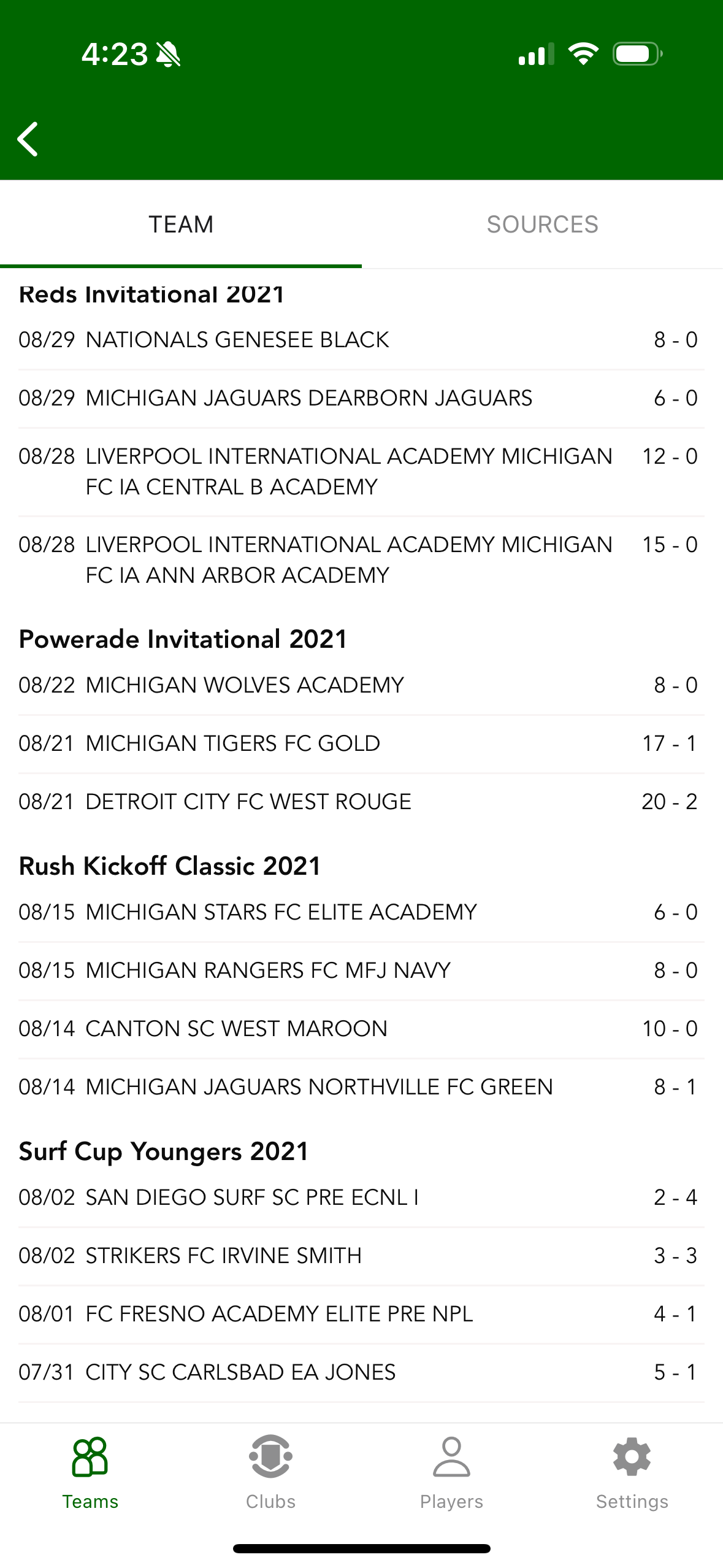
**The Surf Cup loss was essentially a national championship – that team is currently number 2 in the nation and while I’m not certain likely a San Diego All-Star team and the host of that tournament. The teams in Michigan are the top clubs in the area just to illustrate the separation.**
In all honesty, the practices weren’t the most fun. The coach could likely gamify them to make them more enjoyable and maybe he does, I wouldn’t know. However, I know he did set the standard right away. He promised national excellence and Division I college-level skills at the cost of hard work. I’m sure the kids complained at times—but that happens at all top levels in every sport. The parents didn’t have to pay for private sessions at $50 per hour, as many other elite players do, to keep up their skills outside of their club and the kids results were immediate.
Pretty much every coach in the area has heard of this team’s story and their rapid rise to the top. The coach is quite polarizing and maybe even abrasive, so in my opinion people look for any chance to discredit him. It still astonishes me that no other coach or club has decided to replicate his blueprint.
One crucial point in defense of the coaches is that they are fighting an uphill battle with these effective practices. Most parents don’t want long practices of “boring,” technical drills. Many kids don’t want that either. Not everyone is that serious about the sport. It’s a big risk to take as a coach to step way out of the box. Our club has a technical training day in the realm of this type of effective practice, but it’s not nearly technical, long, or repetitive enough. The repetitive part probably being the most important. “Fear not the man that has done 10,000 kicks once, but the man that has done 1 kick 10,000 times.” There are a few teams that could get over the hump so easily by really buckling down on the technical side and it’s just curious that it never happens.
Lastly, some coaches will say, “It’s the players’ job to improve individually outside of practice; my job is to coach the team.” That might fly in college, its unrealistic at the youth level. If you are going to do that, you need to make sure that the work is getting done otherwise you are trying to learn algebra without first mastering basic arithmetic. Even dedicating the first 30 minutes of each practice to repetitive technical drills would yield significant results and minimize backlash. The last hurdle coaches face (and a reason I will likely never coach) is that you are limited to two-year team limits in most major clubs. So, you would be putting in all the risky, hard work, only for another coach to reap the benefits of coaching a technically sound team.
Coaching Red Flags:
I’ve observed many coaches in various sports as a player and a parent. I was even a subpar AYSO coach myself on multiple occasions. My daughter has had coaches who also coach high school and college teams, some who have won state and national championships, one who was a professional in Germany, some whose children have gone pro, and some who were just starting out. They all had their strengths, but they also made some mistakes that hindered individual skill development.
I believe most coaches fail this coaching test: “Would my team have been better off spending an hour kicking a ball against a wall instead of doing what I planned for today?” Very few practices can pass this test. Having a good first touch, accurate passing, and effective dribbling are fundamental skills, akin to learning addition, subtraction, multiplication, and division in mathematics. You cannot teach algebra until you understand 8 x 4 = 32. Yet, that’s essentially what many soccer coaches do. The same teams struggle with the same issues year after year.
On my way to my kids’ practice area, I pass by all the young children at our club, learning the game. I enjoy watching them play. I’m a big fan of the coach of this age group at our club. He puts tremendous effort into every training session. He’s enthusiastic about teaching soccer every day, which I respect. His energetic and demanding coaching style is the right approach. Watching him encourage the young players brings me great joy. It’s evident that they enjoy playing for him and respect him. One of my friends, whose child is on the team, said, “In two years, the kids have never done the same drill twice! Isn’t that great?” While I didn’t have time to fully explain my coaching philosophy, that statement is actually counterproductive. The coach expends a great deal of effort preparing new drills for each practice, and it’s a testament to his dedication. However, it’s ultimately detrimental to the players’ development. Imagine a group of six-year-olds with poles, cones, and various groups, but everything is new to both the coach and the players each time. Five minutes to set up. Five minutes to explain it. Five minutes to watch them fumble through the drill. Five minutes of them doing it somewhat correctly, just in time for the next drill, which requires another round of explanation. This coach is losing the race to one million touches.
Other phrases you don’t want to hear from your coach:
“We focus on development here. It’s not about winning at this age.” This is often a euphemism for “Don’t get mad at me if we lose.”
“I like to let the players figure it out.” This statement infuriates me. Kids need to hear the same lessons repeatedly. That’s the coach’s job. I’ve explained one forward positioning tactic to my daughter at least 50 times, and she still makes the same mistakes. The idea that kids will learn the game on their own like Galileo staring at the sun is absurd.
“We play out of the back, while the other team just plays kickball. That’s why they win.” Even Premier League teams struggle to play out of the back against high-pressing opponents. You can play skillful soccer without conceding goals in your own third in the name of development. Furthermore, I’ve never seen a team successfully play out of the back against another top team until the 11v11 level. You can play out of the back against teams that you are much better than, I’d argue that doesn’t prove or help anything.
This is a real-life, true story of what is possible with great coaching. I feel fortunate to have been close enough to some of the parties involved to understand how the story unfolded. Frankly, knowing what was possible in the right circumstances renewed my passion in youth sports.
The normal path towards travel soccer is AYSO success > kiddie travel club training > travel team. I was in the kiddie travel club stage with either my son or daughter, I don’t quite remember, minding my own business when I see this little mohawked kid that was probably 4 or 5 years old. He was like a kid you would see on Instagram reels from Spain or Brazil. Spectacular technique, stepovers, scissors at full speed, rocket shots with his laces, landing on his shooting foot. Clearly a kid that has spent his short time on Earth playing soccer everyday. I remember thinking, huh, that’s pretty rare. I approached the dad to see what his story was cause I love seeing these type of things, but he wasn’t very interested in any banter. I later found it was his like 7th or 8th kid and one of them was already in the MLS so baby training soccer wasn’t as exciting for him as it was for me.
The prodigal kid signed up for the travel team that was hosting those trainings which happened to have my nephew on the team. They were a new team, they had good players, everyone involved assume they would be a top team. How could they not be? They had a coach that was/is well-respected and still coaches some solid teams. However, they weren’t very good, nowhere near the best team in the state. At one point they were even losing to bridge teams – teams between rec and travel. Totally unacceptable given the talent and amount of training that the travel kids would have over the other non travel kids. It’s like if a G-League team beat an NBA team or something. Even looking back now, the results they had seem impossibly bad knowing how good some of those kids would become.
At some point during the second season, the dad of the prodigal kid gets frustrated. He can’t take it anymore takes 5-6 players off the team adds a few new players and forms his own team. He tells the parents – we are gonna train like crazy, we are gonna travel like crazy, but we’re gonna be really good. If you stick with me they will be choosing their colleges when they are done. Without foreshadowing too much, I remember thinking that was a WILD claim at the time, but also greatly underestimated the commitment that these kids and parents would be taking on.
In 1.5 years they went from like #3000 in the country to the #1 team in the country. In hindsight, the dad/coach probably got lucky with some of the athleticism the kids he brought had (or some very good foresight), but essentially it took 18 months of training for them to go from mediocre in the state to the best team in the country. They held this spot for roughly three years falling at worst falling to at worst around number five. Over that span they were clearly the best team and held number one for the longest periods. In addition, almost all of the top national “teams” are essentially big city All-Star teams. They don’t play or practice together regularly. Miami, Dallas, NY, they just pick their best players and make a “team.” In LA, it’s the Eddie Johnson Academy (former National Team Player), and if your kid is really good you can play in a tournament on their “team.” Those teams never have to worry about not having a good goalie or player injuries like my nephew’s team. They would just send out the bat signal and get the next superstar guest player at any position and not miss a beat. My nephews team was a true team, and they annihilated everyone. Currently in non-gate kept leagues, they are the only team in Michigan in the top 10 nationally – that’s how rare they are.
So, back to coaching: a full-time coach being paid a salary at a top club couldn’t get the same players to top 15 in the state, but in 18 months, a “dad” (I use that term liberally cause he is obviously and amazing coach) was able to take those players to #1 in the country. This is the start of a long point and multiple blogs about how much coaching matters and what good coaching actually means. So what did the dad of the prodigy do differently than everyone else? Stay tuned for part 2!
Video of one the young kid probably right before they started the journey to #1. The competition might look soft but they are super young and this is actually at the biggest tournament in the Midwest.
 justinsadauskas